
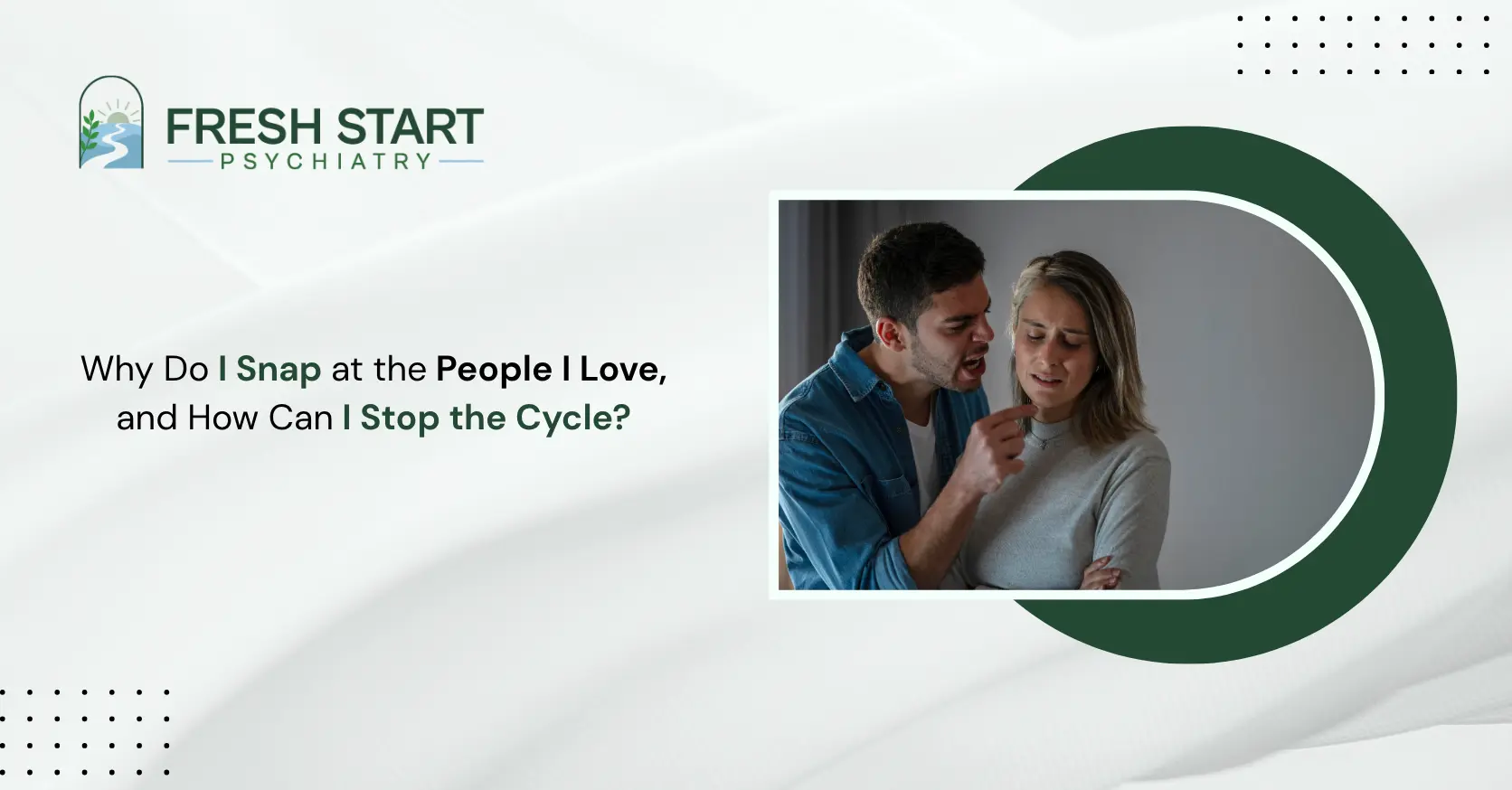
Do you ever have a moment when someone asks you a simple question and you just snap back at them? You hadn’t meant to shout. You weren’t even mad at them. But the words were pointed anyway. A heavy silence follows this. Then the guilt comes over you. You may ask yourself why you keep doing this to all the people who mean the most to you.
Many of us experience this painful cycle. You are not a bad person and you are not broken. When you get angry with your family or friends, it’s usually a sign you’re totally drained, in both body and mind.
What Happens When You Live in Survival Mode?
Reactivity is seldom a flaw in character. That’s usually a clear signal from your nervous system. Living with chronic stress can lock your brain into a state of fight or flight. That means your body is always looking for danger.
When your nervous system is overworked, you struggle to cope with everyday pressure. That’s why your brain may mistake a simple question for an attack. Even replying to a simple text message can suddenly feel like too much to handle. When you are perfectly safe at home, your body still reacts to keep you safe.
The Hidden Triggers: Are You Feeling HALT?
If you find yourself getting snappy, there’s a useful tool from therapy spaces that can help direct you. It’s called the HALT method. HALT stands for Hungry, Angry, Lonely, Tired. When you experience any of these four states, you are much more prone to emotional outbursts.
Let’s look at how these four hidden triggers operate behind the scenes.
- Hungry: Physical hunger drops your blood sugar and increases your stress hormones. And that makes rational thought quite difficult. Emotional hunger is just as real. Perhaps you are looking for some deep connection or some appreciation from your partner.
- Angry: Unresolved anger can simmer quietly for days. It is often a cover for deeper feelings such as fear, hurt, or helplessness. So if you don’t work on the root of the pain, it becomes a short temper.
- Lonely: You may feel totally alone even if you live with your spouse. It happens when emotional distance goes unaddressed.
- Tired: Lack of sleep destroys your ability to control your impulses. When you’re running on empty, you lose the patience necessary for a healthy relationship.
How Your Stress Creates Lasting Disconnection
Snapping becomes your default and slowly chips away at your relationships. You might begin to notice some warning signs in your everyday life. You may avoid conversations because you don’t trust yourself to stay calm. You might even expect a massive argument to erupt before anyone says a word.
A clear sign is when you find it hard to listen. You might feel pushed to solve the problem immediately just so the conversation will end. You may be sitting in the room, but your mind is miles away. And that is where deep shame arises. You know you are a loving friend and partner, but you feel like you are always failing the people you love.
Ways to Break the Habit and Pause
You can learn to stop this cycle. It takes time, patience and a lot of practice. The goal is not to become perfect. The goal is to create a gap between your feeling and your reaction.
Try using these steps to rebuild your connections.
- Get curious instead of judgmental. When you feel a sharp reaction bubbling up, do not shame yourself. Simply ask yourself what you are trying to protect.
- Take one deep breath. Placing a hand on your chest and breathing slowly can calm your nervous system. It pulls you out of survival mode.
- Eat a healthy snack. Never start a serious talk on an empty stomach.
- Set a time limit for hard talks. Make a rule with your partner to avoid serious emotional discussions late at night.
- Repair the damage quickly. If you do snap, apologize right away. Take ownership of your words without blaming the other person.
Why Perfect Calm Is Not the Actual Goal
A lot of people think they have to be perfectly peaceful all the time. This simply is not true. You are human and will get annoyed. The real magic is in how you bounce back from a messy moment. Emotional intelligence is the ability to reduce the time between your reaction and your apology. It’s about understanding your own internal patterns.
The sooner you learn how to repair a broken moment, the stronger bond you create with your partner. You demonstrate that the relationship matters more than your pride. When you soothe your nervous system, your relationships will improve.
How Co-Regulation Helps You Heal
You don’t have to handle all your emotions by yourself. As human beings, we’re wired to heal together. This is called co-regulation. Your nervous system starts to calm down when you are close to a calm, safe person.
A soothing voice or a gentle hug can perform miracles on a troubled mind. Sitting together in silence, not trying to solve a puzzle, is deeply healing. Tell your loved ones you’re working on your reactions. Give them the right words to say when they see you getting overwhelmed.
Finding Support with Fresh Start Psychiatry
Sometimes stress and burnout get so overwhelming that you can’t handle them alone; you might need professional help to figure out what’s causing your reactions. Having the right support can make a world of difference in how you show up for your family.
Fresh Start Psychiatry is a safe environment to heal. Our caring team knows how overwhelming daily life can be. We’re here to provide you with practical tools to calm your mind and improve your emotional health. We work alongside you to uncover your hidden triggers, so that you can finally break the cycle of reactivity.
You deserve to feel peaceful in your home. Your loved ones deserve the best of you too. If you’re ready to stop snapping and start connecting, contact Fresh Start Psychiatry today. Together, we can lay the groundwork for a calmer, happier life.
FAQs
Q: What is the HALT tool?
HALT stands for Hungry, Angry, Lonely and Tired. These four states make it much harder to stay calm. Checking for these helps stop angry outbursts.
Q: How does hunger cause a short temper?
Being hungry drops blood sugar levels. This makes stress hormones go up. When that happens, thinking clearly is very hard to do.
Q: What does survival mode mean?
It means the brain is stuck in a state of fight or flight. Chronic stress tricks the body into seeing simple questions as attacks.
Q: What is a good way to stop a sharp reaction?
Take a slow, deep breath. Put one hand on the chest while breathing. This simple act pulls the brain out of survival mode.

No comment