
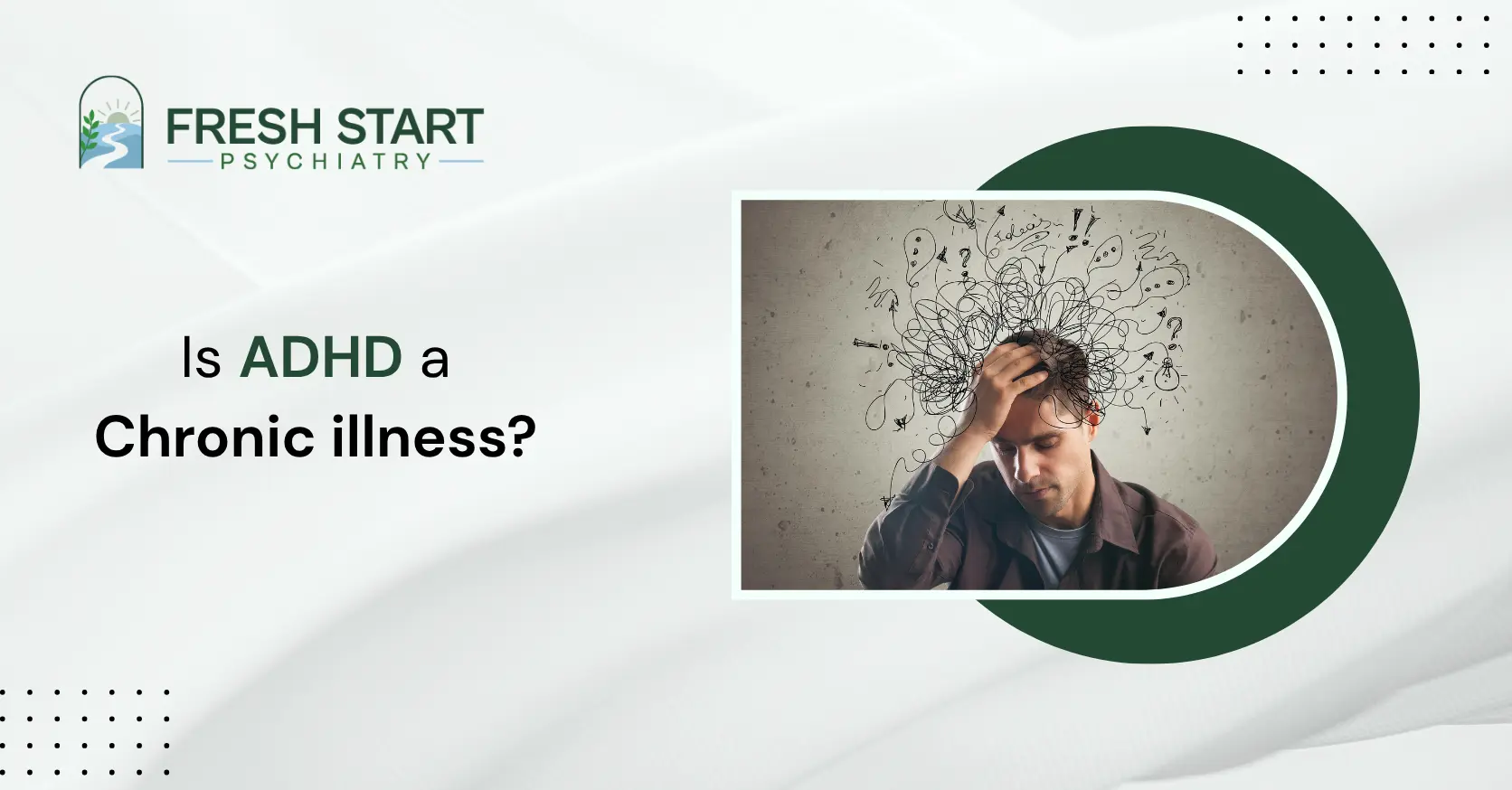
People ask this frequently. Why? They question if Attention Deficit Hyperactivity Disorder simply evaporates as we age. It makes total sense (we all need clear expectations regarding our future overall health). Yes, ADHD is definitely chronic. It will never just disappear like a common cold, zero chance.
However. That is genuinely not bad news at all! You need to get the right tools to handle it. This makes it easier to live a successful, fulfilling and happy life for many years to come.
Yes, ADHD is considered a chronic condition because it often lasts throughout a person’s life. However, with the right treatment and support, people with ADHD can manage their symptoms and live happy, successful lives.
What Does Chronic Mean?
Think about that specific word before you start worrying. “Chronic” sounds intensely scary. It really should not cause blind panic. A chronic illness, practically speaking, only means a health condition persisting for over one year. The CDC notes that these lasting conditions merely require ongoing care (like routine habit tweaks) since they affect how you accomplish normal things every single day. ADHD fits this exact description perfectly. You cannot suddenly catch it from someone else like a flu virus. It is simply how your unique brain actively grows, functionally develops and steadily operates over a full human lifetime.
How ADHD Changes the Brain
Science shows exactly how this unique condition works. Your brain sends urgent messages using important chemicals known as neurotransmitters. With ADHD, these specific messengers simply function differently. This directly shifts how you maintain focus on boring tasks. It dictates everything. Whether you can sit still or effectively plan out your hectic schedule from dawn until dusk. Since it is woven into your actual brain structure, quite literally, it stays with you forever. Always. You cannot pop some magic pill for a week and completely cure who you fundamentally are inside your own human mind.
Common Myths About ADHD
Don’t believe everything you read from sketchy sources. This common condition has a lot of false beliefs around it, for example, the old myth that it only happens to little boys in elementary school. That is entirely wrong because adults suffer from it every single day and women get it just as often (even though they are frequently misdiagnosed for years). Another harmful myth claims that people with ADHD are just lazy, which is deeply unfair and entirely untrue. Their brains just process daily tasks in a completely different way and learning the real facts helps fight these unfair myths in our society.
Signs of Adult ADHD
Overwhelming, that word captures the adult experience with this condition, because while the outward bouncing stops, the internal noise never fades. Your racing thoughts prevent any genuine rest at home. Consider these very frequent struggles grown individuals must endure:
Here are common signs adults face:
- Losing things often, like your keys, wallet, or phone.
- Missing tight deadlines at your job because of poor time management.
- Feeling restless inside all the time, even when you try to sit down.
- Getting distracted during long chats with friends or family members.
- Acting without thinking first about what might happen next.
- Having trouble managing your daily schedule and personal tasks.
- Feeling moody or quick to anger over very small issues.
These signs touch every single part of your adult life. This ongoing daily impact is exactly why doctors call it a chronic medical issue.
Is There a Cure for ADHD?
Do not let the lack of a magic cure drag you down today. Millions of people manage their daily symptoms quite beautifully. Consider poor eyesight. You cannot magically fix terrible vision, instead, you simply wear simple glasses to see the surrounding world clearly. Proper ADHD treatment functions in the same way that helpful lenses do. It easily supplies your highly active brain the exact focus it genuinely needs to thrive (at work or home). Finding the right tailored approach absolutely guarantees that dedicated, proper care makes a massive difference for your own specific daily needs.
Smart Ways to Manage Symptoms
Focus, it is the single most important step toward actually feeling whole again very soon.
Controlling your condition requires an intelligent combination of solid personal routines and clinical support (like regular checkups) to preserve your momentum.
Here is a really quick list of simple home coping tricks:
- Follow a strictly rigid daily schedule so your nervous system knows what to expect.
- Wake up and go to bed on the dot. No exceptions allowed.
- Utilize physical planners to clearly record every pending task.
- Slice intimidating projects into microscopic bits to prevent spiraling, this heavily reduces anxiety and stalling.
- Program obnoxiously loud phone alerts to remember your vital meetings.
- Eat crisp, wholesome meals to properly nourish your mind with fuel.
- Sweat profusely every day to swiftly quiet those loudly racing thoughts.
Building these essential habits demands intense time and patience, but the incredible victories are entirely worth it.
The Role of Professional Treatment
Sometimes, home habits are simply not enough to manage everything on your own. That is completely okay because the National Institutes of Health states that medical care makes a massive difference for adults who struggle.
This is exactly where Fresh Start Psychiatry steps in to help you regain control. Professionals here provide highly personalized psychiatric care for adults by focusing strictly on evidence-based treatment. We create a safe, warm and judgment-free space for everyone who walks through our doors or logs on for a virtual visit.
Our staff gets it, living with this condition is brutally hard. We run deep diagnostics, figuring out exactly what is wrong so your care is entirely yours (not a template). Meds might play a role here, slowly stabilizing those essential brain chemicals over the long haul. The goal? A sharp plan that restores emotional health, rebuilding your genuine, lasting confidence.
Living Well With ADHD
Possibility, that is the absolute biggest takeaway you need to memorize today. Yes. ADHD is a chronic condition. It definitely lasts and it stays with you for life. But it never defines your true limits. It cannot stop you from smashing huge goals. Countless highly successful professionals live with ADHD daily by intentionally leveraging their unique mental strengths and securing the right medical support. You possess the power to do the exact same thing right now to rapidly upgrade your daily life. Securing a formal medical evaluation is simply the first step toward a much happier, healthier you.
FAQs
Q. Does ADHD go away as people get older?
No. It stays with a person for life. The brain is just built that way.
Q. What does the word chronic mean?
It means a health issue that lasts for more than a year. It needs daily care over time.



No comment